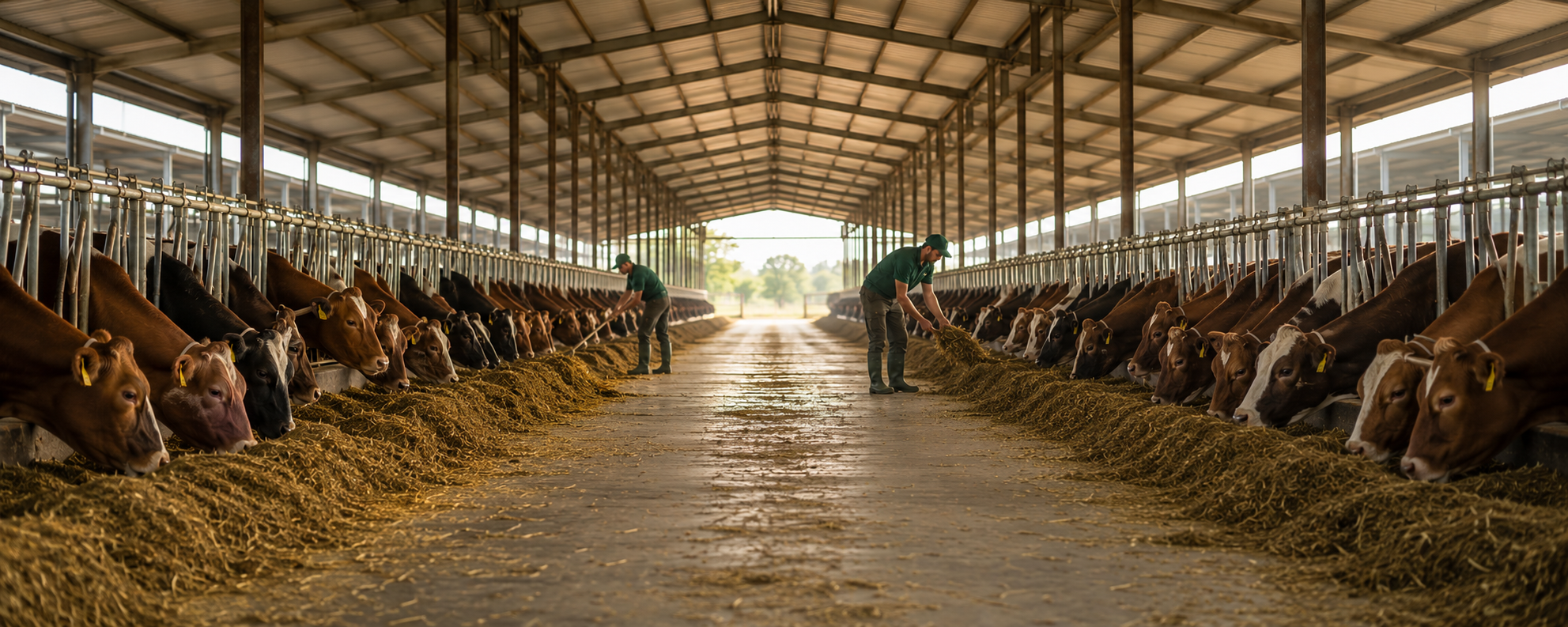
Modern cattle breeding is moving beyond traditional selection based only on pedigree, physical appearance and production records. With advances in bovine genomics, breeders can evaluate an animal’s genetic potential earlier and make more informed breeding decisions.
What Is Genomic Selection?
Genomic selection (GS) combines DNA marker information with statistical prediction models to estimate the genetic merit of cattle. It uses thousands of genetic markers distributed across an animal’s genome to predict its breeding value.
When integrated with selective breeding and reproductive technologies such as Multiple Ovulation and Embryo Transfer (MOET) and in vitro fertilisation (IVF), it can help breeding programs improve desirable traits over successive generations.
How Does Genomic Selection Work?
The process typically involves five steps:
- Build a reference population: Collect DNA marker information and reliable performance records, including milk yield, fertility, growth and disease-related traits.
- Develop a prediction model: Use statistical methods to estimate relationships between genetic markers and economically important traits.
- Genotype selection candidates: Test DNA from young calves, heifers or other breeding candidates.
- Estimate genetic merit: Calculate a Genomic Estimated Breeding Value (GEBV), which predicts an animal’s genetic potential for particular traits.
- Make breeding decisions: Use predictions alongside health, pedigree, performance and genetic-diversity information to select suitable breeding animals.
Understanding the Genomic Selection Workflow
DNA sampling → SNP genotyping → Prediction model → GEBV calculation → Selection and mating.
This workflow allows breeders to evaluate candidates earlier than selection methods that depend heavily on mature-animal performance or progeny testing. Prediction accuracy depends on the quality of the reference population, breed representation and reliability of recorded traits.
Bovine Genomics and Indian Cattle
Bovine genomics focuses on understanding and using genetic information in cattle. Within the wider field of Agri Genomics, these approaches can support livestock improvement, breeding research and the study of economically important traits.
India’s indigenous cattle include zebu (Bos indicus) breeds such as Gir, Sahiwal and Red Sindhi. These populations are important to breeding and conservation efforts because of their adaptation to local environments and their distinct genetic characteristics.
Genomic selection models need to be appropriate for the animals being evaluated. Breed-relevant reference populations, reliable performance records and suitable genetic markers are important when developing genomic tools for indigenous cattle.
Challenges to Consider
Genomic selection requires investment in genotyping, representative reference populations, reliable farm records and technical expertise. Prediction models may not transfer accurately between breeds, so predictions should be validated for the target population.
Breeding programs should balance productivity goals with adaptation, health and genetic diversity. Planned mating and monitoring of relatedness can help manage inbreeding risk.
Conclusion
Genomic selection is an important development in modern cattle breeding because it helps estimate genetic merit earlier and supports more informed selection decisions. When used alongside GWAS research, selective breeding, MOET, IVF and frozen embryo technology, it can contribute to structured genetic improvement programs.
The strongest results come from combining reliable genomic predictions with high-quality performance records, breed-appropriate models and responsible mating strategies.